To the future…
Albond® product sustainability involves several processes: EPD (Environmental Product Declarations), LCA (Life Cycle Assessment), the LEED, BREEAM and DGNB green building schemes, GREENGUARD Gold and VOC testing, and environmental approvals from manufacturers.
Although Albond® Aluminium Composite Panel is mainly made of light aluminium, it is a building material that combines metal strength, superior smoothness, vibration absorption, extreme durability and ease of maintenance. It expands the capabilities of architects and designers and enables the creation of original designs.
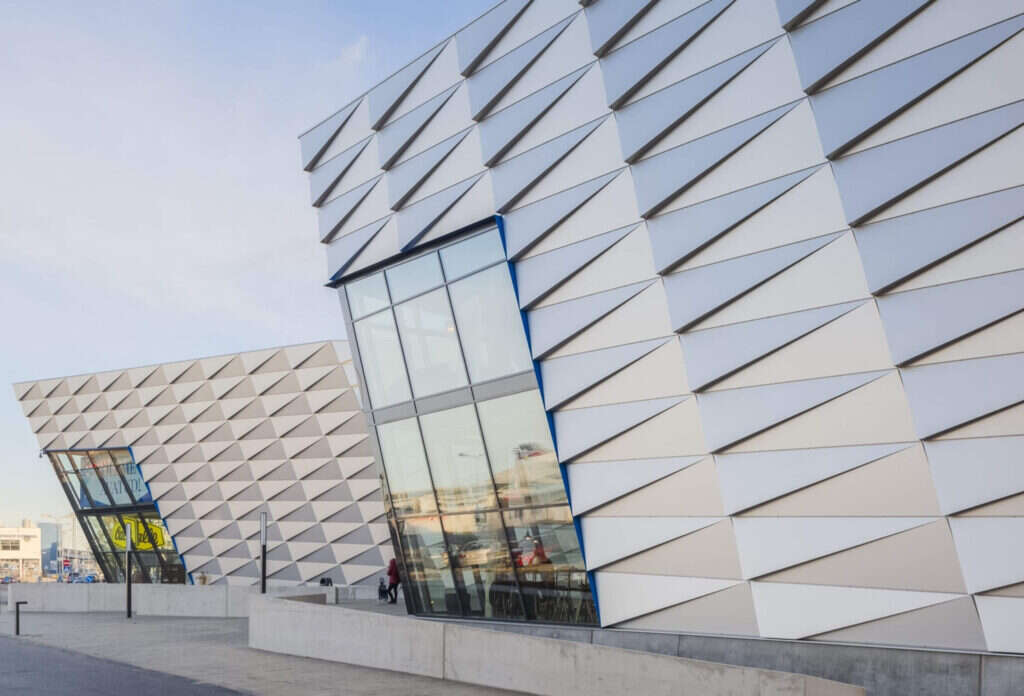
Why choose Albond®
When you choose Albond® products, you choose to reduce your environmental footprint through:
- more efficient production with less waste;
- a high percentage of recycled material;
- the opportunity to build with higher thermal efficiency and solar reflection;
- negligible VOCs and other potentially harmful compounds;
- robustness and finish durability that ensure a decades-long service life;
- easy recycling at the end of life, with almost 100% recovery.
We create the future without consuming it.
EPD, LCA and LEED
EPD – Environmental Product Declaration
The environmental impacts of Albond products have been assessed through Life Cycle Assessment, documented in EPD reports, verified by independent validators and published on The International EPD System (environdec.com), EPD Turkey (epdturkey.org) and the ECO Platform (eco-platform.org).
Our EPDs follow ISO 14025 and EN 15804 and cover Albond PE, FR and A2 aluminium composite panels and HDPE, PVDF and PE painted aluminium sheet.
LCA – Life Cycle Assessment
The life cycle assessment of all Albond products has been carried out according to ISO 14040/44.
It measures resource efficiency and the quantity of waste generated, and calculates the environmental impact of each product over its whole life cycle: from the extraction and processing of raw materials to production, use, end of life and disposal.
LEED – Leadership in Energy and Environmental Design
LEED is the most widely used green building rating system in Türkiye and worldwide, and can be obtained for all building types.
Thanks to its EPDs, Albond provides points in the Materials and Resources category of LEED v3, v4 and v4.1 to project owners seeking certification. EPDs also contribute to BREEAM and DGNB assessments.
ISO 14064 corporate carbon accounting
The aluminium sector is among the five energy-intensive sectors covered by the EU Green Deal. Albond is reporting and verifying its carbon footprint according to ISO 14064, calculating the impact of greenhouse gases such as carbon dioxide (CO₂), methane (CH₄), nitrous oxide (N₂O), hydrofluorocarbons (HFCs), perfluorocarbons (PFCs) and sulphur hexafluoride (SF₆).
Alongside its carbon footprint studies, Albond continues its work on Scope 1, 2 and 3 greenhouse gas emissions in line with ISO 14064, for sustainability reporting frameworks such as GRI.
Recycling
Albond composite panels are made entirely from recyclable raw materials. The aluminium skins and the core between them can be recycled and used again as main raw material for other products. Albond Aluminium Composite Panel and Albond painted aluminium sheet have no harmful effect on the environment.
Aluminium is the second most abundant metal on earth. Lightness, resistance and recyclability make it the material of the future: it does not break, burn or corrode, and its properties and quality are not affected by recycling. It is 100% and infinitely recyclable, and recycling it saves up to 95% of the energy needed for primary production.
Why recycling?
- It helps protect the environment and reduces pollution.
- Resources are used more economically and efficiently.
- It reduces the quantity of solid waste.
- It turns waste into an economic asset: the high material value of aluminium is the main incentive for recycling.
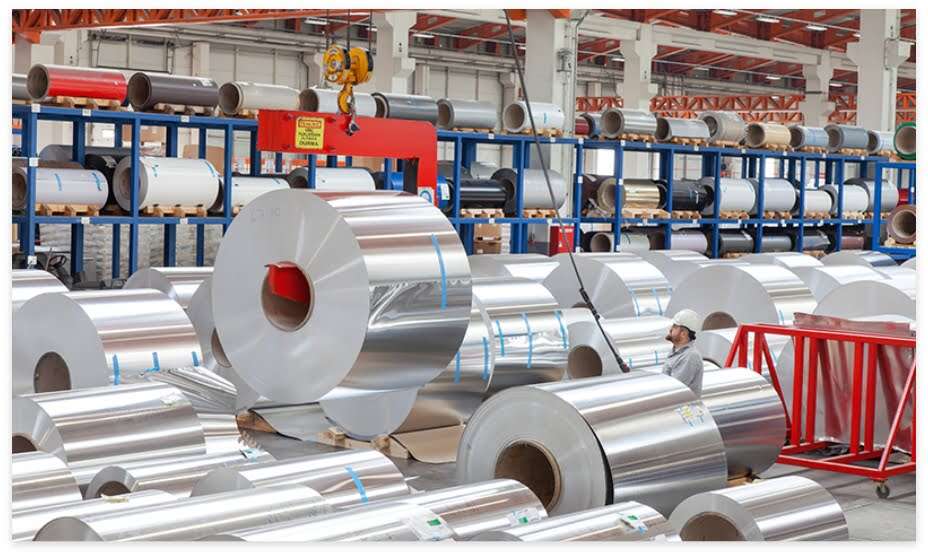
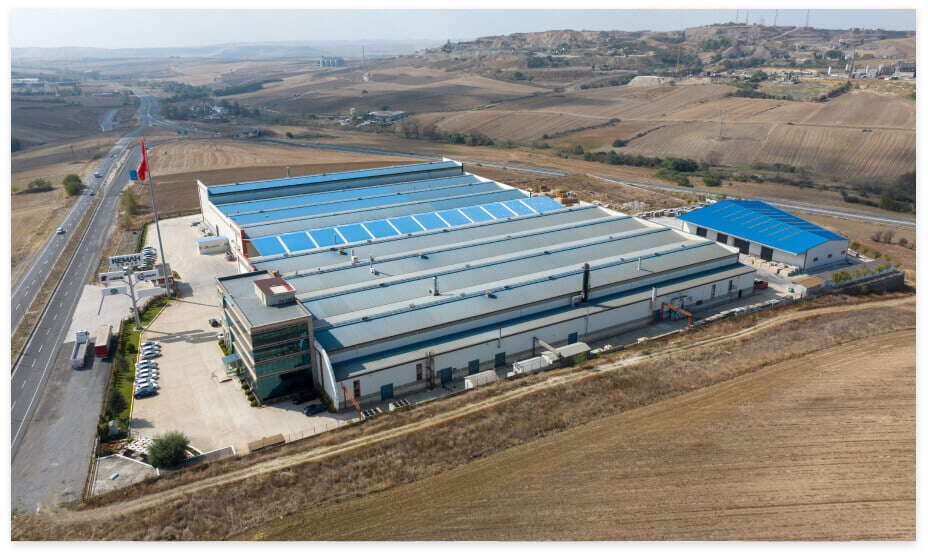
Recycling in Albond
As part of its environmental responsibility, Albond recycles the components of painted aluminium and aluminium composite panels in its own facilities, turning them into added value.
The core and the aluminium skins are separated in-house: the core material is processed and reused, while the aluminium is sent to partner plants with melting furnaces. With a system it has developed, Albond recycles polyethylene and mineral-filled edge trims while production is running, together with the material wasted at the start and end of each production run.
Paint residues go back to Albond’s laboratory and Paint Mix department. Solvents left over from production or cleaning are sent to external solvent separation facilities, where dirty solvents are regenerated by condensation and evaporation and reused as clean solvent.